• Skip to primary navigation
  • Skip to main content
  • Skip to primary sidebar
  • Texas A&M Forest Service
  • Texas A&M Veterinary Medical Diagnostics Laboratory
  • Texas A&M AgriLife Extension Service
  • Texas A&M AgriLife Research
  • Texas A&M College of Agrculture and Life Sciences
Montgomery County Master Gardeners
Montgomery County Master GardenersTexas A&M AgriLife Extension Service
  • Menu
  • Home
  • About Us
    • Demonstration Gardens
      • Adaptive Garden
      • Aquaponics Garden
      • Bog Garden
      • Bees – Our Apiary
      • Composting Area
      • Discovery Garden
      • Floral Gardens
      • Greenhouse 1
      • Herb Garden
        • Entry to Herb Garden
        • Herb Recipes
      • Orchard
      • Vegetable Garden
    • Educational Gardening Classes
      • Gardening Classes
        • 2025 June 14 Gardening Class – Container Gardening
        • 2025 June 12 Gardening Class
    • Arbor Day
      • Arbor Day – free trees
        • Arbor Day Events
          • 2026 Arbor Day
    • MCMGA Privacy Statement
    • Speakers Bureau
  • Contact Us
    • Garden Helpdesk
    • How to Become a Master Gardener
    • Soil Testing
  • Resources
  • Members Only
    • VMS
    • Forms for MCMGA Members
    • Membership Directory
  • Publications
    • Articles
  • Blog Posts
    • 2025 June 14 Gardening Class – Container Gardening
    • 2025 June 12 Gardening Class
    • 2025, June 7th Open Gardens Day
    • 2025 May 8th Gardening Class, Squarefoot Gardening
    • Gulf Muhly – Texas Superstar
    • Box Turtle
    • Red Velvet Ant
    • March Protecting Your Lawn
    • 2-23 Soil – A Living Layer of Earth
    • January Gardening Tips
    • Texas Kidneywood
    • Red Velvet Ant
    • Wildscapes
    • Walkingstick Insect
    • Texas Wild Orchids
    • Tea Roses
    • Japanese Maple ‘Baton Rouge’
    • Skinks of Texas
    • It’s time to think spring bulbs!
    • Spring Bulbs Planted in Fall – Part one
    • Canna Leafroller / Brazilian Skipper
    • Mexican Bush Sage (Salvia leucantha)
    • American Beautyberry Jelly Recipe
    • Dragonflies and Damselflies
    • Rattlesnake Master
    • Do Copperheads eat Cicadas?
    • Crinum
    • Texas Bluebell
    • The Red-cockaded Woodpecker
    • Indian Pink
    • A happy gardener’s view to a symbiotic relationship with deer
    • New Texas Superstars
    • Profile of a master gardener – Lynell Soltys
    • Profile of a master gardener – Michael Christensen
    • Profile of a master gardener – Teena Reese
    • Profile of a master gardener – Lloyd Schill
    • Profile of a master gardener – Cliff Blackerby
    • Heat-loving plants for summer months
    • Why you should aerate your lawn
    • Planting for Pollinators and Other Wildlife
    • Monarchs and Milkweed
    • What the heck is pH and why is it important?
    • Tale of Woe by Bob Dailey
    • Photographing Flowers Series Part 11: Still LIfe Photography
    • Photographing Flowers Series Part 10: Life Cycle
    • Photographing Flowers Series Part 9: Abstract Photography
    • Photographing Flowers Series Part 8: The Art of Exclusion
    • Photographing Flowers Series Part 7: Find Something
    • Photographing Flowers Series Part 6: Shallow Depth of Field
    • Photographing Flowers Series Part 5: Black and White
    • Photographing Flowers Series Part 4: Macros
    • Photographing Flowers Series Part 3: Perspective
    • Photographing Flowers Series Part 2: Composition
    • Photographing Flowers Series Part 1: Light
    • Not Just Another Rose of Sharon
    • Must Have Abutilons
  • Events Calendar
Home » MCMGA Blog » Photographing Flowers Series Part 8: The Art of Exclusion

Photographing Flowers Series Part 8: The Art of Exclusion

December 29, 2019 by cblackerby

Honing the art of exclusion.

Macro of a sunflower

Sunflower

Great photographs are as much about what the photographer decides to exclude from the pictures as it is about what is included in them. If your main subject is overshadowed by other elements, a photo simply will not work. It won’t make an impression on the viewer; in fact, it is more likely to confuse the viewer about what’s important in the picture. A professional photographer won’t just walk up to a flower and start taking pictures; you shouldn’t either. Take a moment to look at the flower and see if there are any imperfections that detract from its beauty. Walk around, look at it from different angles and pay special attention to the background from the selected shooting angle. Photography instructors will  tell you that failure to consider the background ruins more pictures than any other thing.

Pay a great deal of attention to your picture’s background before tripping the shutter. This is an important part of isolating your subject. If you have editing skills, you can isolate your subject using your favorite editing program. Remember, being able to edit does not minimize the importance of composing your pictures properly in the first place.
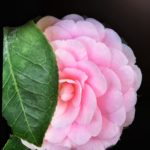
Pink camellia with leaf folded over it.

Pink Perfection Camellia

As a general rule, focus on the stamen; it’s good practice and a good focal point for your picture. As is often the case, there are times when rules are made to be broken. Take multiple shots using different focal points. You’re sure to find one shot that is really pleasing.
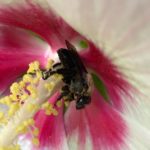
Hibiscus stamen with bee

Hibiscus and friend

A key part of isolating your subject is to decide what your subject will be. Is it the complete flower, a macro of the stamen or an isolation shot on the petal? Choose the most interesting component of your subject and zoom in to get the level of detail that is going to interest your viewers.   Don’t be afraid to frame the shot so the flower will be cropped; doing so draws the eye to the focal point, eliminates distractions and creates a look from a unique perspective for viewers.
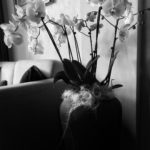
Black and white indoor picture of orchids

Orchids

In Part 7 of this series we talked about adding something extra; in this article we talk about exclusion. In every case, objects in the picture should support and enhance the visual strength of the primary subject. Remember to pay special attention to your picture’s background, and shift your point of view when there are distractions from the primary subject.

Honing your exclusion skills will let you isolate the subject, simplify your pictures and make them more appealing to your viewers. It’s an important skill to develop.

Grab your cameras and start practicing the art of exclusion.

If you’ve missed any articles in the series you can find them by going to the MCMGA homepage, select MCMGA Blog link and look for the Photographing Flowers Series 1-7.

Written by Cliff Blackerby, July, 2019.


Filed Under: Blog Posts

Upcoming Events

Jan 31
9:00 am - 12:00 pm

2026 Fruit and Nut Tree Sale

View Calendar

Events Calendar

35 events found.
Notice
There were no results found for this view. Jump to the next upcoming events.
Notice
There were no results found for this view. Jump to the next upcoming events.
  • December 2025

Calendar of Events

S Sunday
M Monday
T Tuesday
W Wednesday
T Thursday
F Friday
S Saturday
0 events, 30
0 events, 1
0 events, 2
0 events, 3
0 events, 4
0 events, 5
0 events, 6
0 events, 7
0 events, 8
0 events, 9
0 events, 10
0 events, 11
0 events, 12
0 events, 13
0 events, 14
0 events, 15
0 events, 16
0 events, 17
0 events, 18
0 events, 19
0 events, 20
0 events, 21
0 events, 22
0 events, 23
0 events, 24
0 events, 25
0 events, 26
0 events, 27
0 events, 28
0 events, 29
0 events, 30
0 events, 31
0 events, 1
0 events, 2
0 events, 3
Notice
There were no results found for this view. Jump to the next upcoming events.
Notice
There are no events on this day.
Notice
There are no events on this day.
Notice
There are no events on this day.
Notice
There are no events on this day.
Notice
There are no events on this day.
Notice
There are no events on this day.
Notice
There are no events on this day.
Notice
There are no events on this day.
Notice
There are no events on this day.
Notice
There are no events on this day.
Notice
There are no events on this day.
Notice
There are no events on this day.
Notice
There are no events on this day.
Notice
There are no events on this day.
Notice
There are no events on this day.
Notice
There are no events on this day.
Notice
There are no events on this day.
Notice
There are no events on this day.
Notice
There are no events on this day.
Notice
There are no events on this day.
Notice
There are no events on this day.
Notice
There are no events on this day.
Notice
There are no events on this day.
Notice
There are no events on this day.
Notice
There are no events on this day.
Notice
There are no events on this day.
Notice
There are no events on this day.
Notice
There are no events on this day.
Notice
There are no events on this day.
Notice
There are no events on this day.
Notice
There are no events on this day.
Notice
There are no events on this day.
Notice
There are no events on this day.
Notice
There are no events on this day.
Notice
There are no events on this day.
View Calendar

FOLLOW US ON FACEBOOK

Help Desk

Texas A&M AgriLife Extension Service
Texas A&M University System Member

Texas AgriLife Extension Office/MCMGA
9020 Airport Road
Conroe, Tx. 77303
(936)539-7824

  • Compact with Texans
  • Privacy and Security
  • Accessibility Policy
  • State Link Policy
  • Statewide Search
  • Veterans Benefits
  • Military Families
  • Risk, Fraud & Misconduct Hotline
  • Texas Homeland Security
  • Texas Veterans Portal
  • Equal Opportunity
  • Open Records/Public Information